




Does linen stretch? A little. It just won't be doing the splits anytime soon.
We've all been there. You try on a new piece and it's a little snug, so naturally you start negotiating with yourself.
It will loosen up. It just needs a few wears. Maybe after a wash?
The good news is that linen does soften and relax with wear. The less convenient news? It's not going to magically become a size bigger.
Here's what happens to linen clothing over time, where it gives a little, where it doesn't, and what to do if your new piece isn't quite sitting the way you hoped.
In This Article
The Quick Answer · Why It Doesn't Stretch · Where It Does Give · Silhouette · Weave and Weight · Blends vs Pure Linen · Stretching Out of Shape · How to Stop It · Should You Size Up? · If a Piece Feels Snug · How to Stretch Tight Linen · Fitting a Growing Bump · Shrink or Stretch? · FAQs · The Bottom Line
Does Linen Stretch? The Quick Answer
Yes, but not in a dramatic way.
Pure linen has very little natural stretch, usually around 2 to 5%. It's a strong flax fibre, tightly woven and much more interested in holding its shape than giving way.
So, when in doubt, buy for the fit you want now. Linen will soften, relax and become wonderfully comfortable, but "I'll just wait for it to stretch" is not a particularly reliable sizing strategy.

Why Linen Doesn't Stretch Like Other Fabrics
Some fabrics stretch because their fibres have a slight natural bounce, like wool, or because something stretchy is woven in, like the spandex in your leggings.
Linen has neither.
Flax fibres are straight and stiff, so there's no bounce to speak of. That's exactly why linen holds its shape so well over the years instead of sagging.
Less stretch, more durability. For a fabric built to last a decade or more, that's a trade worth making.
But It Does "Give" a Little, Here's Where
Linen won't stretch out to a new size, but it does soften and relax a touch with wear and washing.
The weave loosens just enough to feel noticeably better against your skin, part of why linen always feels nicer on wash three than wash one. That's not stretch though.
Nothing's getting bigger, it's just getting softer.
Want to speed it along? We've got a few tricks in how to soften linen.
Here's the bit that trips a lot of people up: how much "give" you feel really comes down to whether your linen has been pre-washed.
Pre-washed linen has already been through that first big wash and relax cycle before it reaches you, so what fits on day one is close to what you'll be wearing in a year. Ours always is.
Non-pre-washed, sometimes called loom-state, linen still has that first wash ahead of it, and it can shrink, soften and shift in fit noticeably more the first time it's washed.
If you've ever bought raw linen and found it fit differently after washing it yourself, that first wash is exactly why.

100% Linen vs a Touch of Stretch: Why It Changes the Silhouette
Most pure linen pieces, ours too, feature that classic linen look: relaxed, breathable and beautifully easy.
But not every linen dress is going for the same thing.
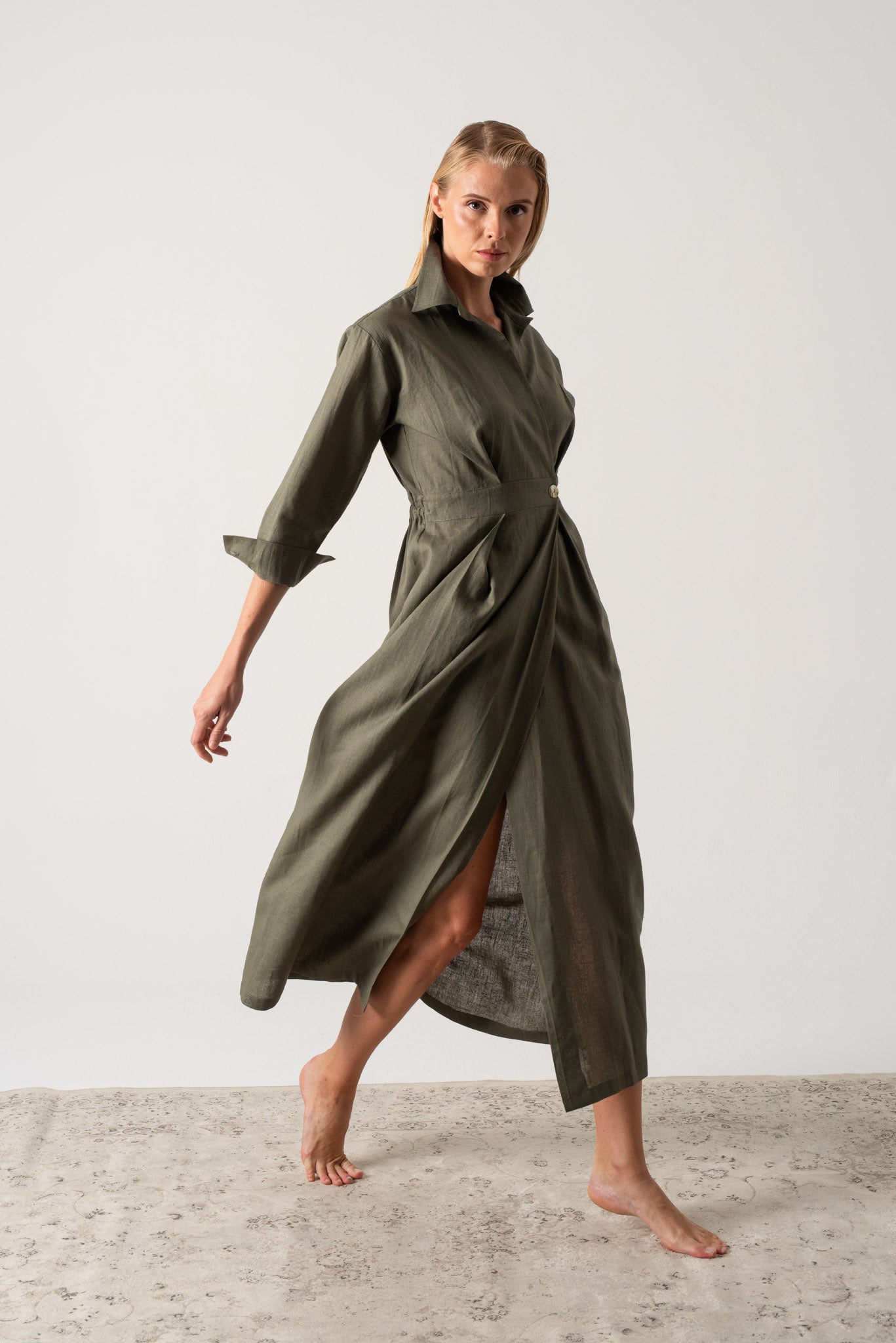
Some of our more tailored styles, like the Zulu Wrap Dress and Tuxedo, have a tiny amount of elastane woven in, barely 1%.
Not to make them stretchy, but to give them slightly more structure and help them hold a sharper, more tailored silhouette.
Think of it as two very different kinds of linen. One is NYC. The other is the South of France.
One has somewhere to be. The other has nowhere to be until aperitivo.
So, which one are you?
If you love your linen relaxed, soft and with just enough rumple to say I'm on holiday, go for pure linen.
If you prefer a cleaner, more sculpted cut, look for a touch of elastane. Same beautiful linen feel, just with a little more structure.
Does Weave and Weight Change How Much Linen Gives?
Here's where most of the "stretch" confusion actually starts, and it has nothing to do with stretch at all.
The weave makes a difference. A tightly woven linen has less room for movement, so it feels more structured and holds its shape.
A looser, more open weave has a little more freedom to move, which can make it feel softer and more forgiving.
Same fibre. Same flax. Completely different experience.
Weight matters too. A heavier, more structured linen, like our tailored linen pants or a sharp jacket, has more substance behind it, so it holds its shape more firmly.
A lightweight, gauzy linen, like a breezy linen top, feels more fluid. It moves with you and may feel like it gives you more room.
But here's the catch: it isn't actually stretching more.
It's simply lighter, softer and less structured, so there's less resistance when you move.
Think of it as the illusion of movement, rather than an actual change in size.
So if your friend's linen shirt seems to get looser than yours after a few wears, don't panic and start Googling "is my linen defective?"
It's probably not a quality issue. The weave and weight are simply doing their jobs, giving each piece its own particular feel.

Do Linen Blends Stretch More Than 100% Linen?
It depends what it's blended with.
- Linen-cotton blends behave a lot like pure linen. Cotton has a touch more natural give than flax, but not enough to change how a garment fits day to day.
- Linen-rayon or linen-viscose blends tend to feel silkier and drapier, and often loosen up a little more with wear, since those fibres are softer to begin with.
- Linen with a small percentage of elastane or spandex is the real exception. This is genuine, mechanical stretch, not just the fabric relaxing. Even then it's usually just 1 to 3%, enough to hold a tailored line without turning linen into activewear.
Want a predictable, true-to-size fit? 100% linen and linen-cotton blends are your safest bet.
Does Linen Stretch Out of Shape Over Time?
This is the one actually worth paying attention to. Linen can loosen out of shape when the same spot takes repeated strain, think knees on trousers you kneel in a lot, elbows on a shirt you always lean on, or shoulders left on a narrow wire hanger for months.
It's not the fabric failing you. It's just physics.
Enough pressure in one place, repeated often enough, tends to win eventually.
How to Stop Linen From Stretching Out of Shape
- Hang structured pieces on wide, rounded hangers. Wire hangers concentrate all that weight on two small points, and that's exactly what creates bumps at the shoulder over time.
- Fold heavier linen instead of hanging it, especially knits and jersey-linen blends, so gravity isn't doing the stretching for you.
- Wash gently and skip the dryer's high heat. Aggressive tumbling puts real stress on the weave. Our full guide on how to wash linen walks through the exact settings to use.
- Give your pieces a rotation. Wearing the same trousers to the same desk chair every day concentrates strain in the same spot. A day or two between wears helps when you can manage it.
Should You Size Up for Linen?
The safe answer is no. Linen doesn't stretch to accommodate you the way knit fabrics do, so we'd always suggest buying true to size rather than sizing up and hoping it relaxes into place.
Check your measurements against our full sizing guide before you buy, it's the most reliable way to get it right the first time.
And if you do get it wrong? Not a big deal.
Sizing can always be adjusted with an exchange, so there's very little risk in giving it a go.
What to Do If a Piece Feels Too Snug
A few honest options here, depending on the piece:
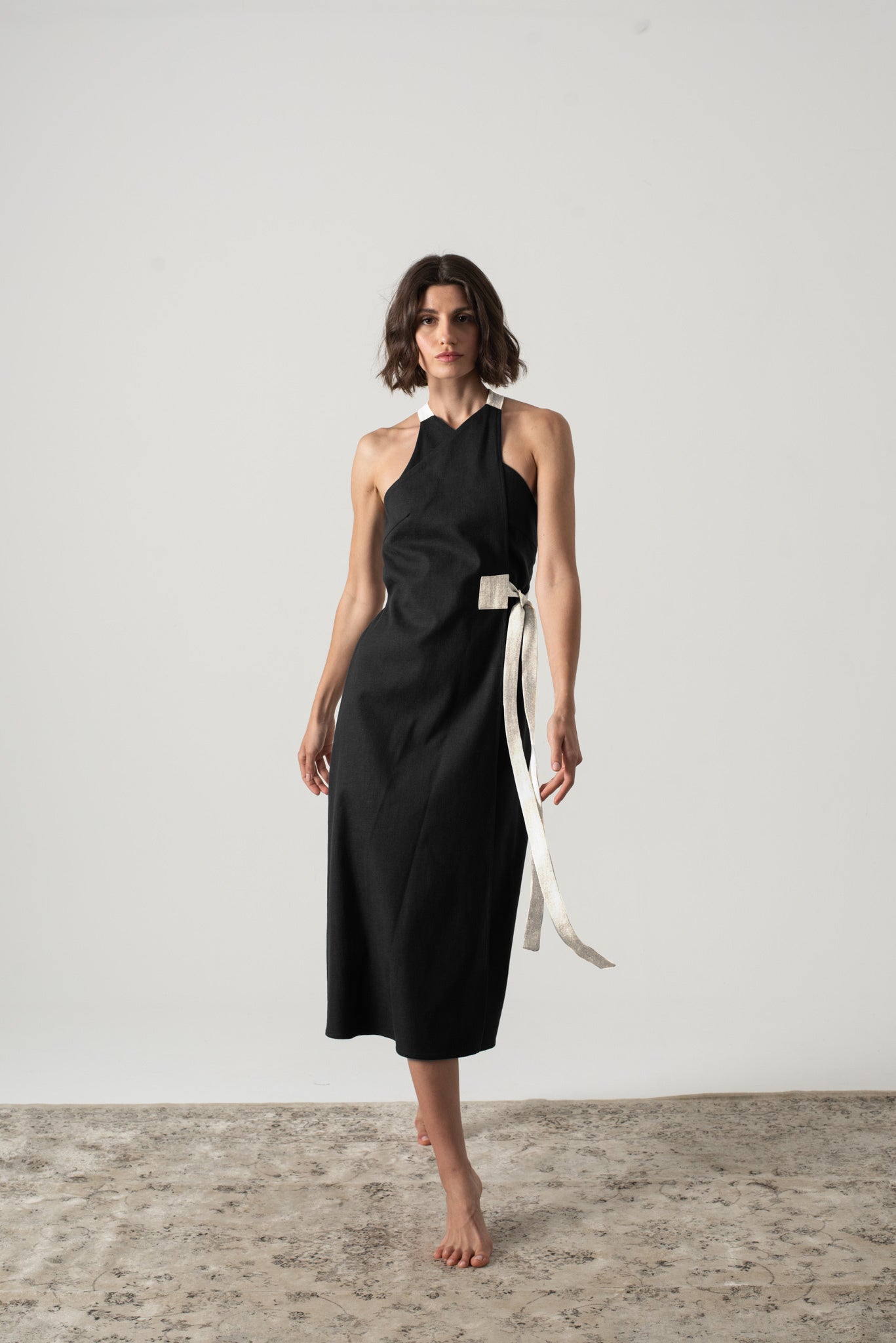
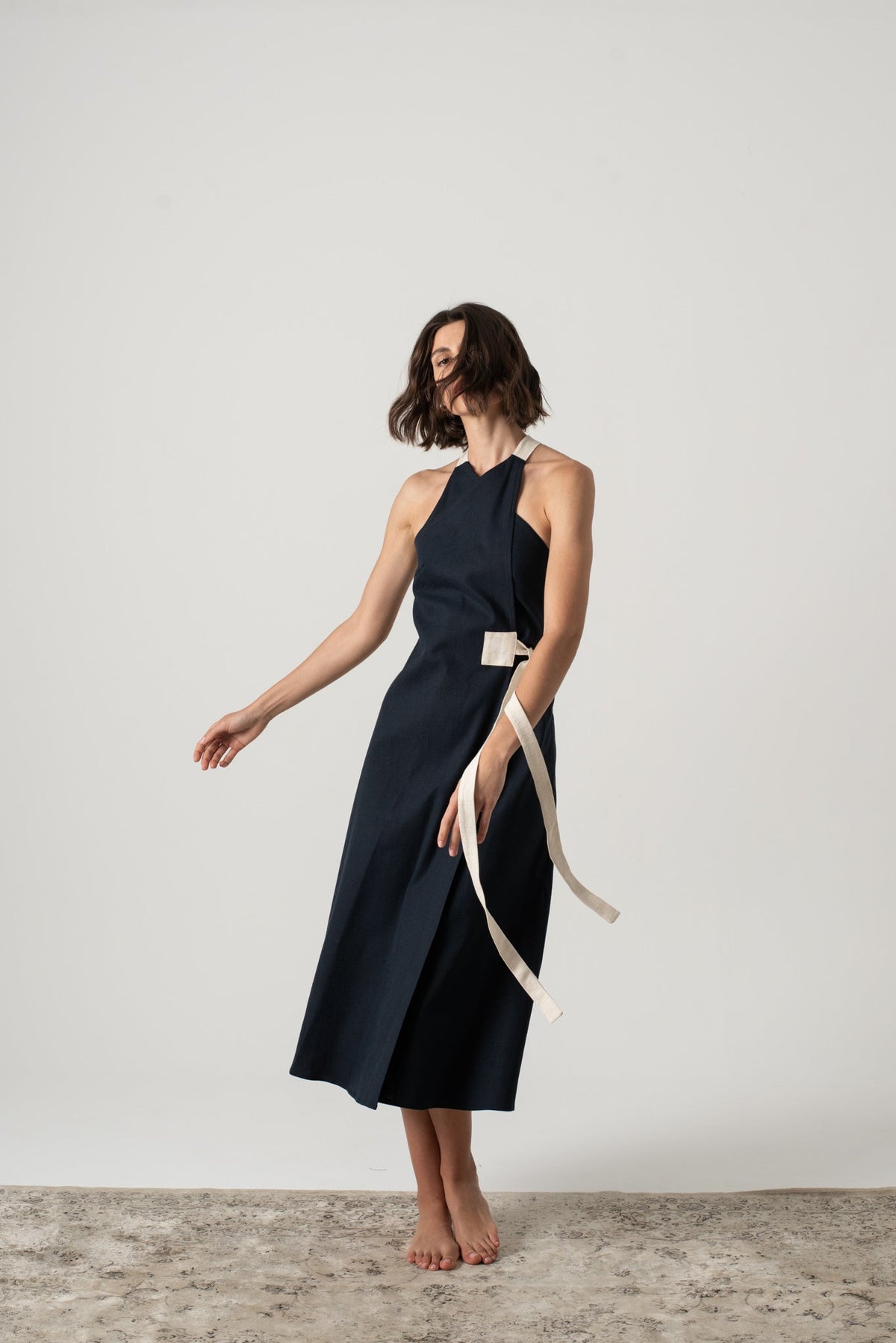
- Check for adjustability first. A lot of our wrap dresses have self-tie closures built in specifically so you can fine-tune the fit, and many of our linen pants have an elasticated waistband for exactly this reason.
- Give it one wash. It'll soften and feel more comfortable against the body, though don't expect a meaningful size change.
- Don't wait it out. Our linen is pre-washed before it reaches you, so what you buy is what you keep. It won't loosen further with that first wash the way untreated linen sometimes does. Snug now means snug in a month too. Better to exchange it.

How to Stretch Linen That's Too Tight
To be upfront, we'd always rather you exchange a piece that doesn't fit. It's genuinely the surest fix.
But if exchanging isn't an option, maybe it's a gift, a final sale item, or you've simply fallen for it too much to send back, there's a gentle trick that can coax a little extra room out of a tight spot. It won't work miracles.
Linen has almost no natural stretch, so think of this as easing out a small amount of give, not resizing the garment.
- Dampen just the tight area, not the whole piece. A spray bottle works better than soaking it. You want the fibres relaxed, not saturated.
- Put it on while damp and gently stretch the tight section by hand, holding light tension for twenty to thirty seconds at a time. Your own body heat and movement help ease the fibres into shape.
- Or lay the piece flat, pin the tight area slightly wider than its current width, and let it air dry fully like that. Same idea, just the gentler, hands-off version.
- Spread it over a few wears rather than forcing it all in one go. Linen fibres respond better to gradual coaxing than one aggressive pull, which risks the seams before it risks the weave.
- A warm iron with a damp pressing cloth over the tight spot can help relax the weave too. Just skip this on structured or tailored panels, where you actually want the shape to hold firm.
One honest caveat: this trick buys you a little breathing room, not a full size.
If something's genuinely a size too small, no amount of damp tugging turns it into the size up, and pulling too hard risks the seams before it risks the fabric.
Our advice, in order: check the sizing guide first, exchange second, and treat this trick as a last resort.
Does Linen Stretch to Fit a Growing Bump?
A question we get asked often enough to answer properly. Pure linen won't stretch to accommodate a pregnancy the way a knit or jersey fabric will.
If you're dressing through pregnancy, look for styles cut with extra room and adjustable ties rather than relying on the fabric to stretch for you.
Or better yet, browse our dedicated linen maternity clothing collection, designed with that movement and room built in from the start.
Does Linen Shrink or Stretch? Here's the Difference
These two get mixed up all the time, and they're actually opposite problems. Shrinking is fibres tightening, usually from heat.
A hot wash or a hot dryer are the main culprits.
Stretching is fibres loosening, usually from repeated strain or pressure in one spot. Linen is far more prone to the first than the second.
So in practice, if a piece feels different after some wear, shrinkage is the more likely explanation, not stretch.
We've covered exactly how much linen can shrink and how to prevent it in does linen shrink, worth a read alongside this one if you're trying to figure out why a favourite piece doesn't fit quite like it used to.

Frequently Asked Questions
Does linen stretch when wet?
A little. Wet linen fibres relax slightly, so skip the wringing and twisting while you wash it. Just handle it gently until it's dry.
Does linen stretch with wear over the day?
Marginally, in high-movement spots like knees and elbows, but it settles back into shape once you take it off and it gets a rest. Completely normal, not a sign anything's wrong.
Will linen shrink back after it stretches?
Not reliably. Unlike some synthetic fabrics, linen doesn't have the elastic memory to snap back to its original shape once it's genuinely stretched out.
That's different from shrinkage, if you're curious how much linen can shrink in the wash instead, we've covered that separately in does linen shrink.
Prevention through gentle care and good storage matters more than trying to fix stretch after the fact.
Do linen pants have stretch?
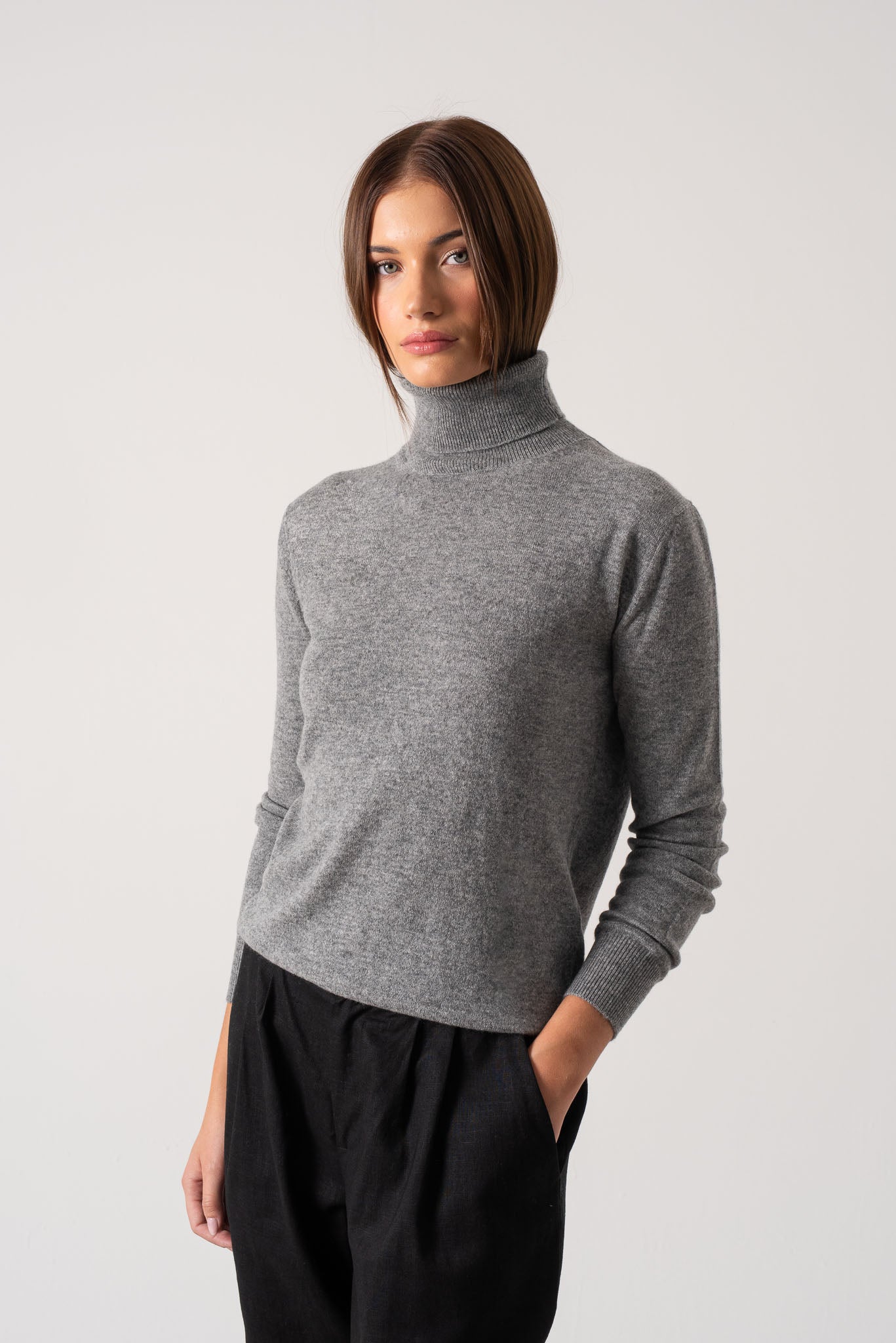
Most pure linen trousers don't, though plenty of styles include an elasticated waistband for comfort. That's a different thing to the fabric itself stretching. Worth checking the product description for the specific cut.
The Bottom Line
Linen isn't a stretchy fabric, and honestly, that's part of what makes it so good.
Choose the size and style that feels right from the start, give it a little care, and it should look remarkably similar years from now.
That's the beauty of linen. It's not designed for a season and a quick trip to the donation pile.
It's the kind of piece you can wear, wash, love and keep coming back to for years.
- Buy true to size, linen won't stretch to fit like a knit will.
- Heavier, denser weaves hold their shape more predictably than light, open ones.
- Expect softness with washing, not a size change, more on that in how to soften linen.
- Store structured pieces on wide hangers, fold the rest.
- Wash gently, following our how to wash linen guide, to protect the shape long term.
- Not sure on sizing? An exchange is always an option, so it's worth getting right rather than guessing.
Buy it well. Wear it often. Look after it. The rest tends to take care of itself.